Most decisions about a custom rugby jersey eventually come back to the cloth. Fabric weight and composition set how warm the shirt is, how it moves, how it survives a season of tackles, and how well it takes your club’s colors and logos. Two jerseys can look identical on a mockup and behave completely differently on the pitch because one is a light stretch knit and the other a heavy structured weave. This guide breaks down the fabrics used in rugby shirts, what the weight numbers mean, and how to match cloth to the way your side actually plays.
Why fabric weight (GSM) is the first spec
Fabric weight is measured in GSM — grams per square metre — and it is the single number that tells you the most about a jersey before you touch it. A lower GSM means a lighter, cooler, more flexible shirt that breathes well but offers less structure. A higher GSM means a heavier, tougher, warmer fabric that holds its shape and resists tearing but traps more heat. Rugby spans a wide range because the sport itself does: a sevens winger in summer heat and a front-row forward in winter mud want very different things from the same garment. Getting the weight right for your climate and positions matters more than almost any other spec.
Weights by role and climate
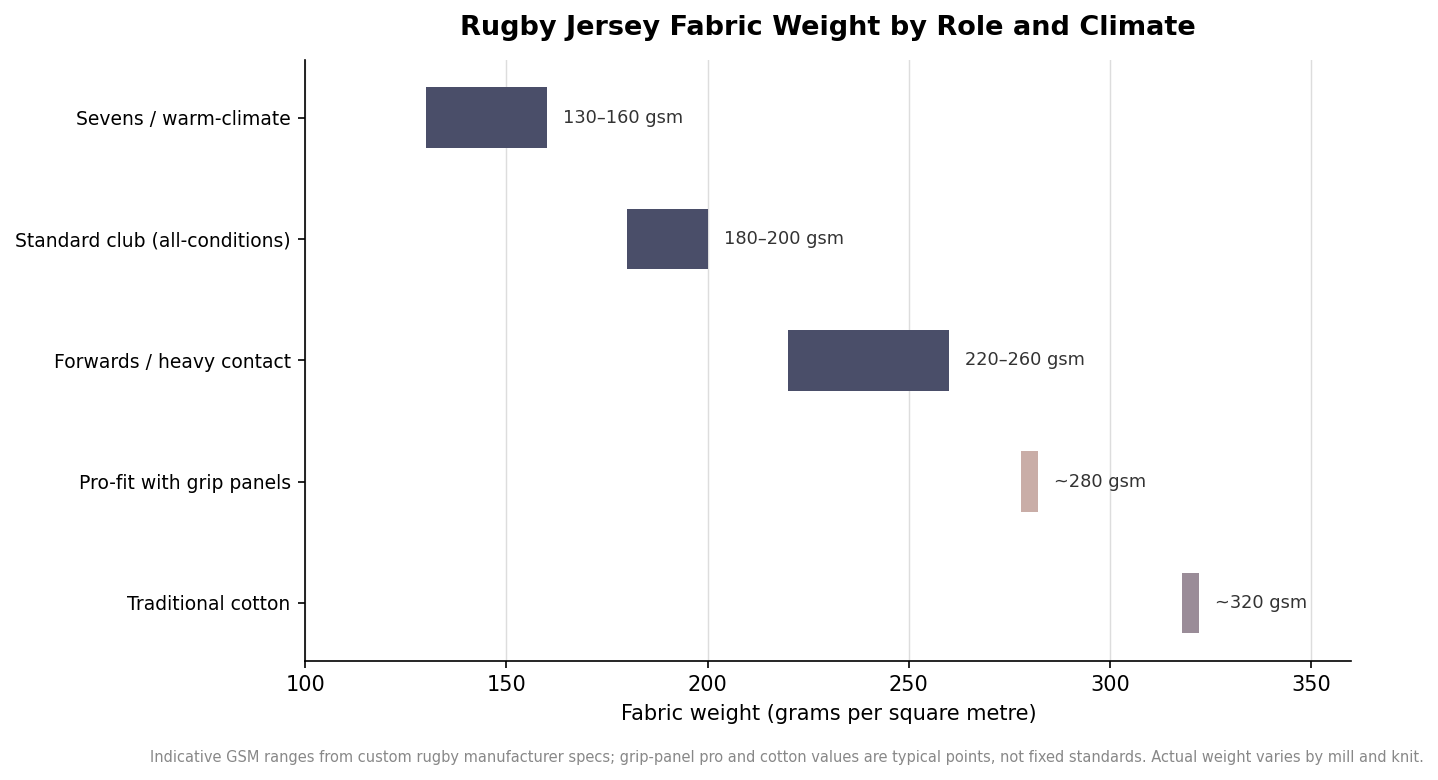
The usable range runs from roughly 130 to 320 GSM. At the light end, 130 to 160 GSM suits sevens and warm-weather play, where cooling and freedom of movement outrank everything else. 180 to 200 GSM is the all-conditions middle ground most clubs land on for standard match and training shirts — durable enough for contact, light enough to wear comfortably across a season. For forwards and heavy-contact roles, 220 to 260 GSM adds the density that stands up to scrums, mauls, and repeated grabbing. Pro-grade performance shirts sit around 280 GSM where grip panels are integrated, and traditional cotton jerseys are heavier still at about 320 GSM. Treat these as indicative bands rather than fixed rules; the exact weight varies by mill and knit, and a good supplier will tell you the GSM of any fabric they quote.
Polyester, stretch blends, and cotton
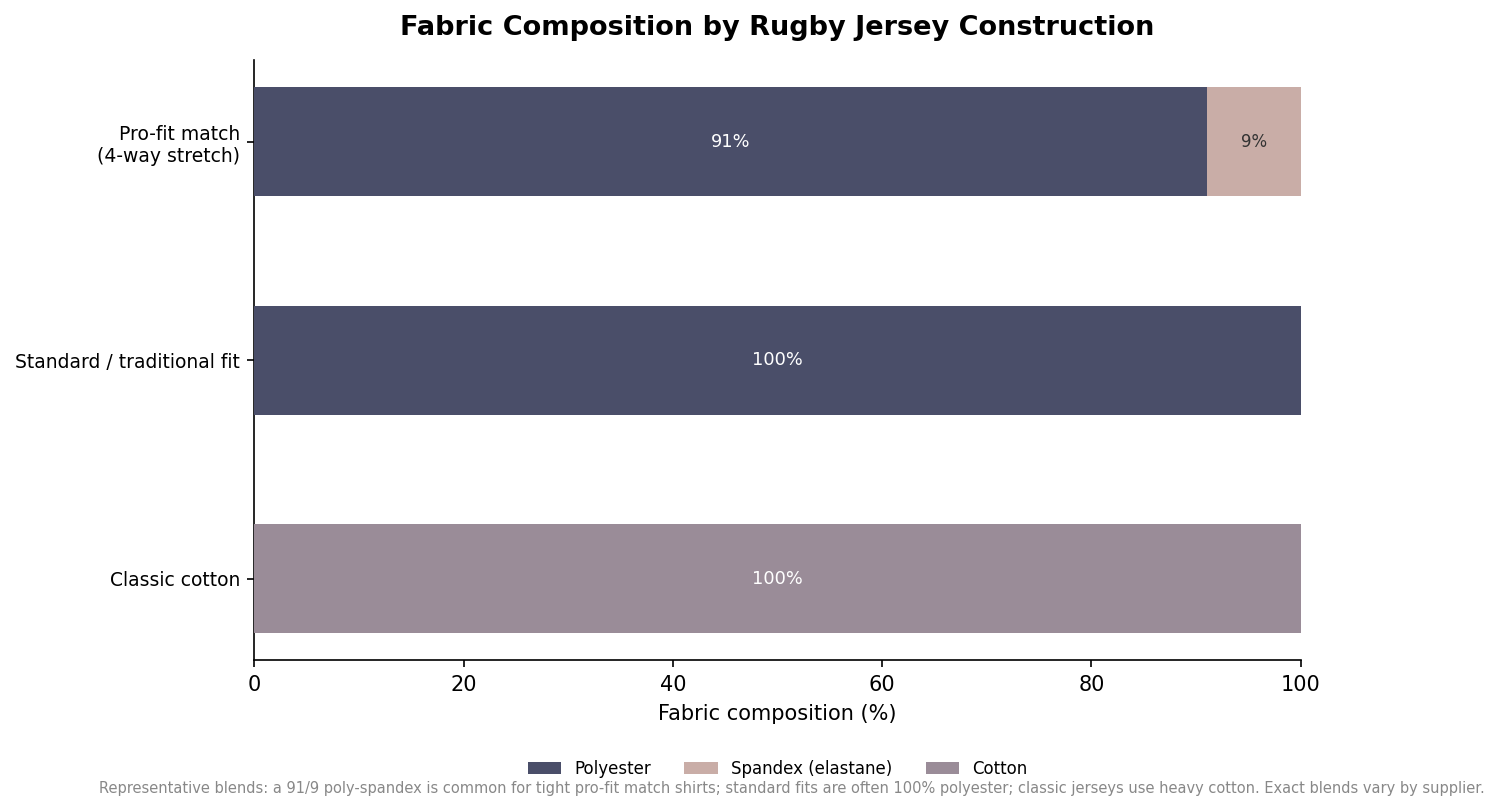
Modern match jerseys are overwhelmingly polyester, which is durable, holds structure, wicks moisture, dries fast, and takes dye-sublimation printing cleanly. A plain 100% polyester knit is the workhorse for standard-fit shirts. Where a club wants a tight, athletic cut, the fabric shifts to a polyester-spandex blend — commonly around 91% polyester and 9% spandex — which adds the four-way stretch a body-hugging shirt needs to move without restricting the player. Recycled polyester (rPET) is increasingly offered for clubs that want a lower-footprint option. Cotton remains the choice for classic, traditional-look jerseys: it feels substantial and looks the part, but it is heavier, absorbs water, and dries slowly, which is why it has largely disappeared from competitive match kit. The construction knit matters too — interlock and pique give a firmer, more stable surface, while mesh panels are added where breathability is the priority.
Fit and construction
Fabric and fit are linked, because a tight jersey only works in a fabric that stretches. A pro-fit or player-fit shirt uses the stretch blend to sit close to the body, which gives opponents less loose material to grab in a tackle; it is unforgiving of body shape but fast and functional. A standard or supporter fit uses the firmer 100% polyester or cotton in a relaxed cut that suits training, casual wear, and a wider range of builds. Whichever you choose, the seams are where a rugby shirt earns its keep. Look for reinforced collar stitching and strengthened shoulder seams, since those are the areas that take the most load, and optional grip panels on the chest and forearm on performance shirts to help retain the ball in contact. These construction details are worth confirming in writing, because they are easy to leave off a cheap quote and hard to add after the fact.
How fabric choice affects decoration
The cloth you pick also decides how the jersey is decorated. Polyester is the natural partner for dye-sublimation, where the design is printed into the fabric and cannot crack or peel, which is why full-color sublimated club kits are almost always built on polyester. Heavier cotton and cotton blends take a more traditional route with sewn-on numbers or heat-applied graphics, which fits the classic look but adds weight and can feel stiff over large areas. If your design has all-over color, gradients, or sponsor logos across the whole shirt, you are effectively committing to polyester; if you want a heritage cotton jersey with a stitched crest, plan the decoration around that from the start rather than treating it as an afterthought.
Order minimums and lead time
Custom rugby kit is a made-to-order product, so plan around it. Minimum orders commonly start around 50 pieces per design, with the per-unit price dropping as you move from the 50-unit tier toward 100 and beyond. Production typically runs four to six weeks from final design approval, and once international shipping is included, a realistic end-to-end timeline is eight to twelve weeks. Those are general ranges rather than a quote, and they move with the fabric, the decoration, and the season — suppliers get busier before the start of a competition. Lock your fabric weight and fit early, because they drive both the price and the calendar more than any single design detail.
Start from how your club plays and where, translate that into a GSM band and a fit, then choose the fabric and decoration to match. Do it in that order and the jersey will perform the way you expect; skip the fabric decision and you are trusting the mockup to tell you something it cannot.